
The History and Evolution of the Men’s Leather Jacket
Few garments carry as much cultural weight as the leather jacket. It has been worn by fighter pilots, war heroes, bikers, punks, movie rebels and fashion designers, and each of them left a mark on what the jacket means today. To understand why a leather jacket feels powerful the moment you put it on, it helps to know the century of history stitched into it.
Born in the skies
The modern leather jacket began as functional military kit. In the years around the First World War, pilots flew in open cockpits where cold and wind were genuine dangers, and leather — windproof, insulating and tough — was the obvious solution. The flight jackets that followed, including the fur-collared shearling coats and the classic A-2 and G-1 bomber styles of the Second World War, were engineered for survival first and style second. Yet their clean, purposeful lines proved so handsome that they never left.
The rise of the biker
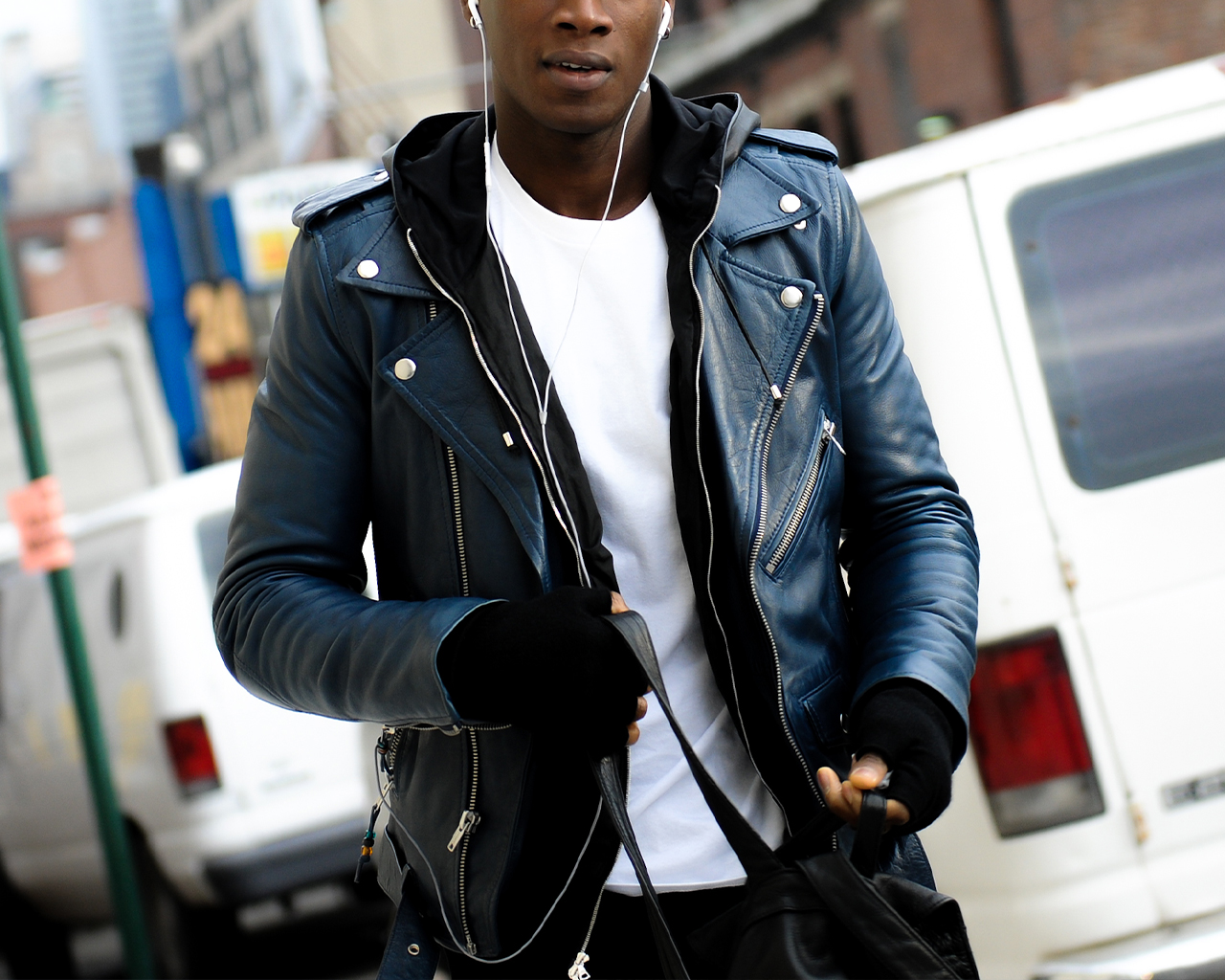
In 1928, a design commissioned for motorcyclists introduced the asymmetric zip, wide lapels and belt that became the template for the biker jacket. The angled zipper let a rider lean forward without the jacket bunching, and the heavy hide protected against road and weather. When returning servicemen took up motorcycling after the war, the biker jacket moved from practical gear to subcultural uniform — a badge of freedom and a little bit of danger.
Hollywood and the birth of the rebel
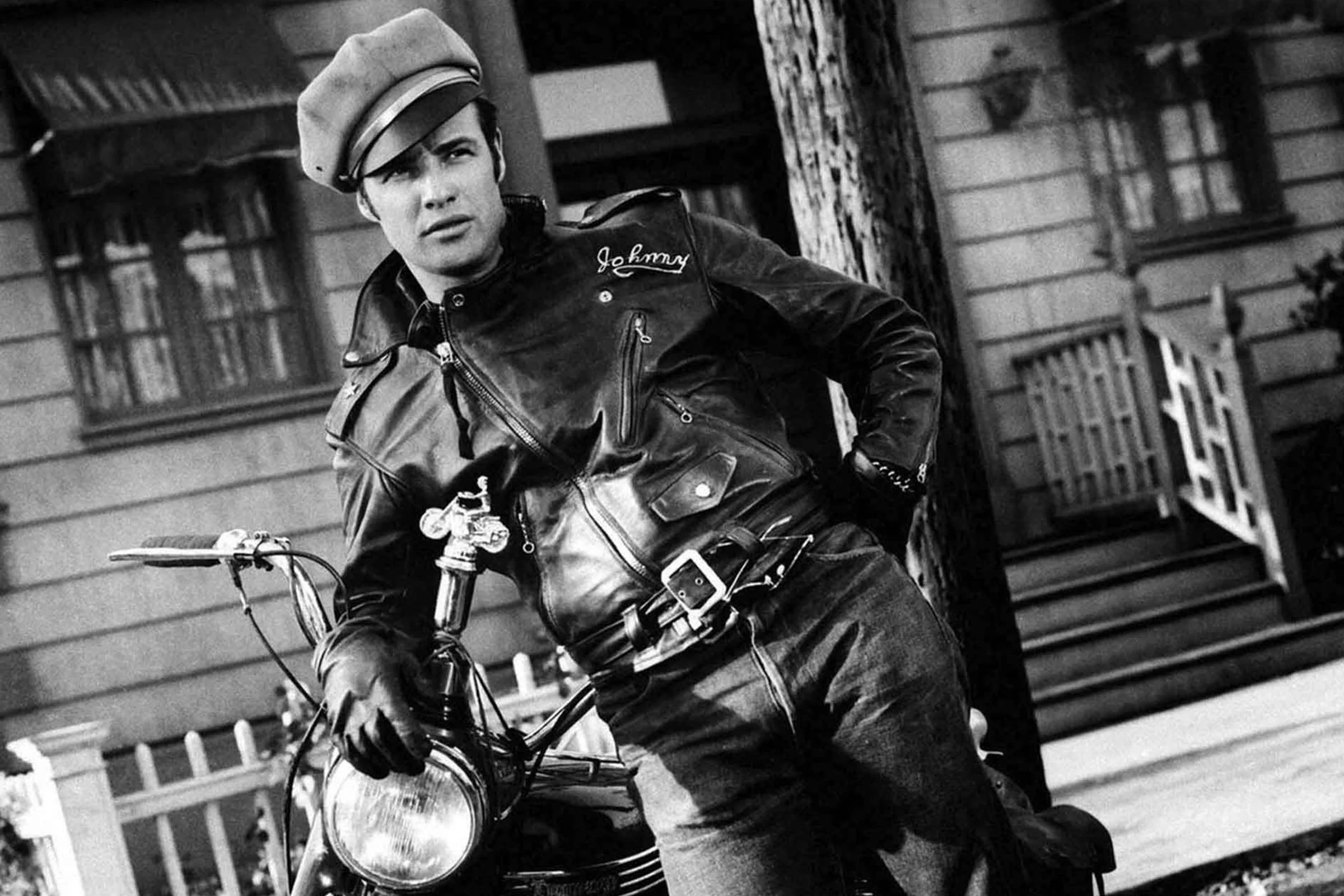
The jacket’s transformation into a symbol of rebellion happened on screen. When a leading man rode into a 1953 film in a black biker jacket, and another slouched in leather as a troubled teenager two years later, the garment became shorthand for youthful defiance. Schools and parents reacted by banning it, which of course only cemented its cool. From that point on, the leather jacket was never just clothing — it was an attitude.
Music makes it iconic
Every wave of rebellious music adopted the leather jacket and reshaped it. Rock and roll made it swagger; punk covered it in studs, zips and hand-painted slogans; heavy metal made it armour. Bands turned the jacket into a stage uniform, and fans wore the same style to belong. Through these decades the leather jacket absorbed an edge of self-expression that no marketing campaign could manufacture.
From subculture to high fashion
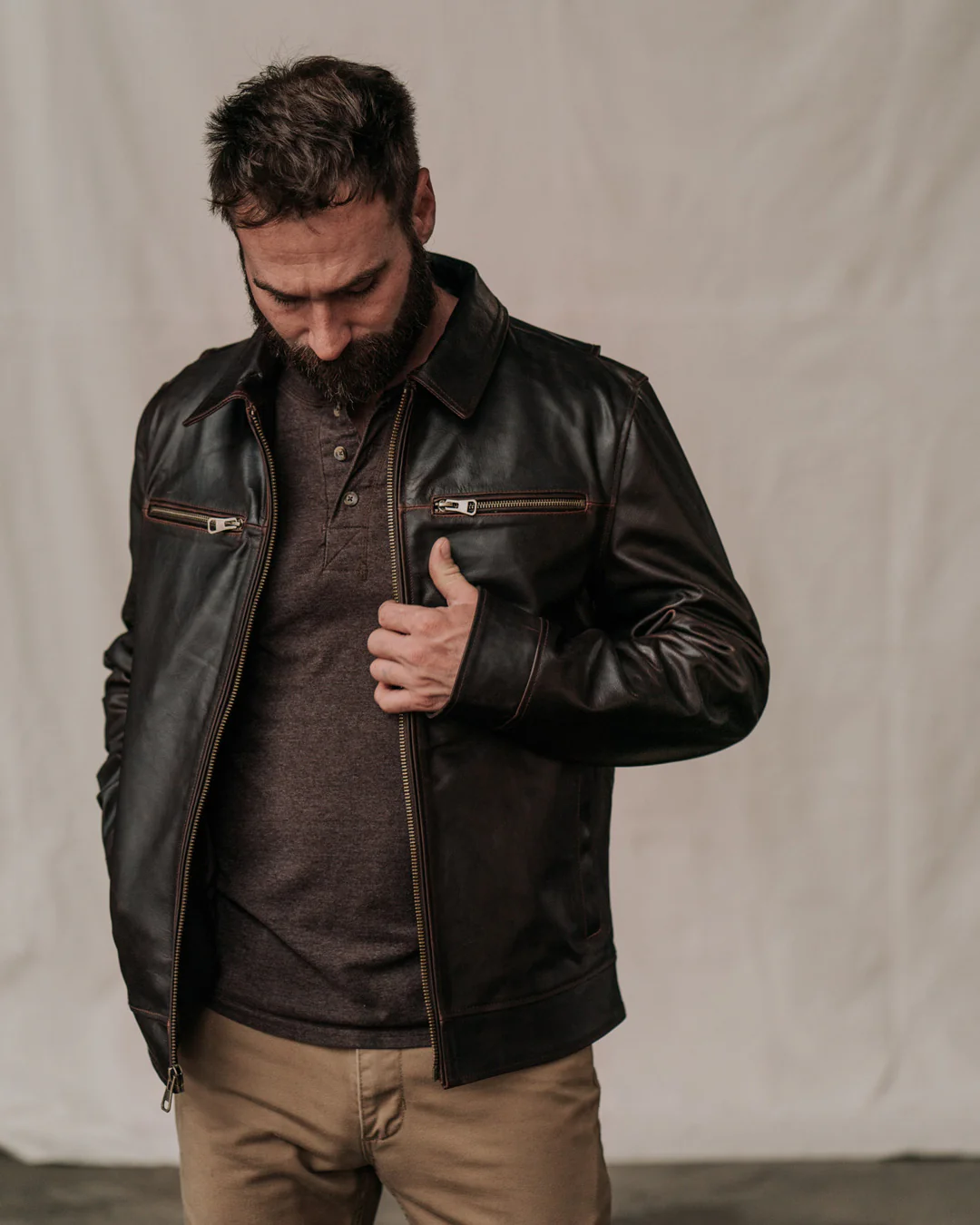
By the late twentieth century, designers had brought the leather jacket onto the runway, refining its proportions, experimenting with exotic skins, colors and tailoring, and pricing it as luxury. The jacket now lived a double life: raw and rebellious on the street, sleek and elevated in the fashion house. That range is exactly why it works for so many men — the same basic garment can read as rugged or refined depending on the leather, cut and styling.
Why it endures
The leather jacket has survived a hundred years of changing taste because it was never really about fashion. It began as honest, functional design, and it accumulated meaning — courage, freedom, rebellion, artistry — without ever losing that functional core. When you buy one today, you are buying into that lineage. Whether it is a fur-collared aviator, a classic biker or a clean modern bomber, the jacket connects you to a story that is still being written.